Professional Profile
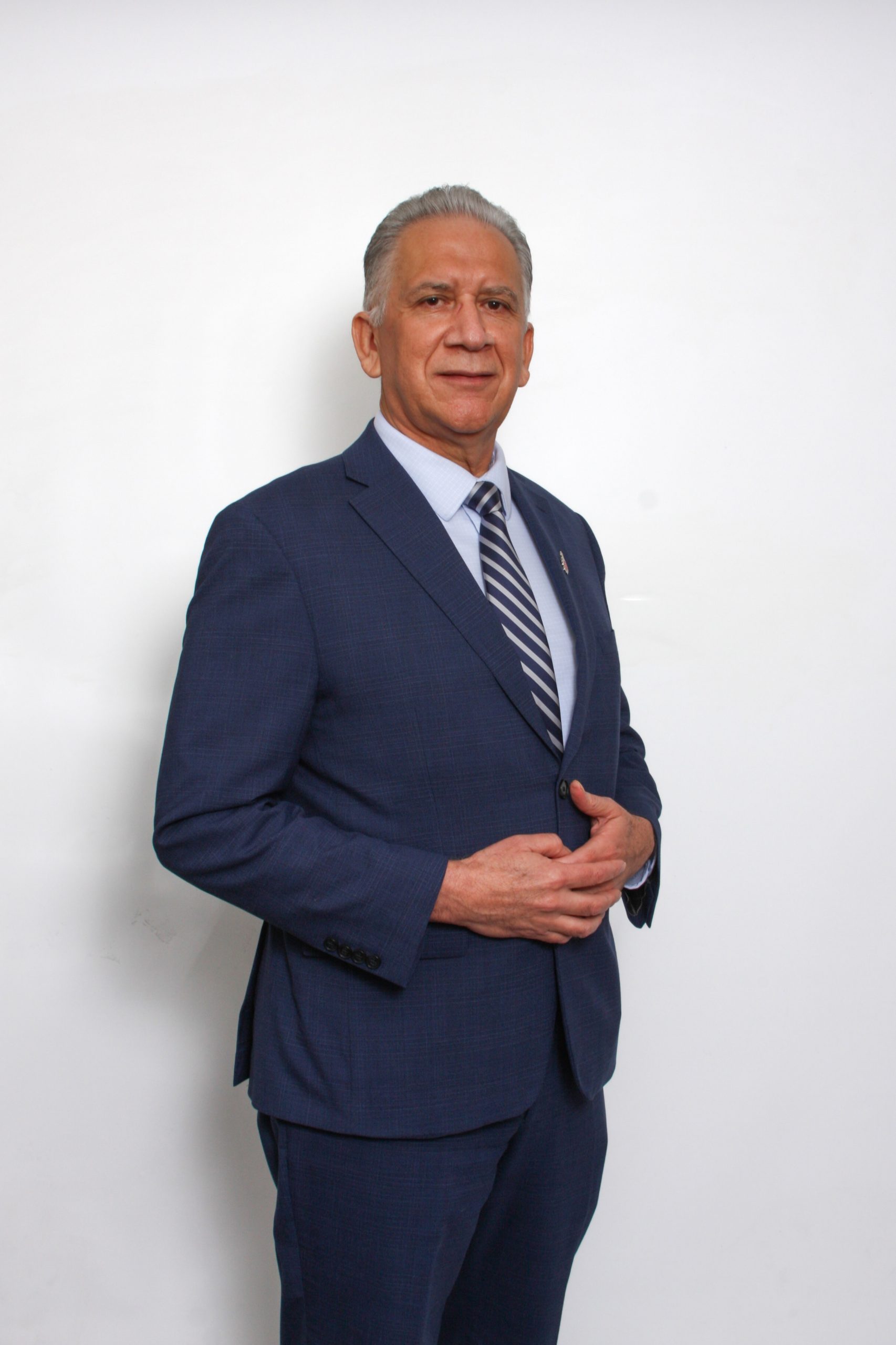
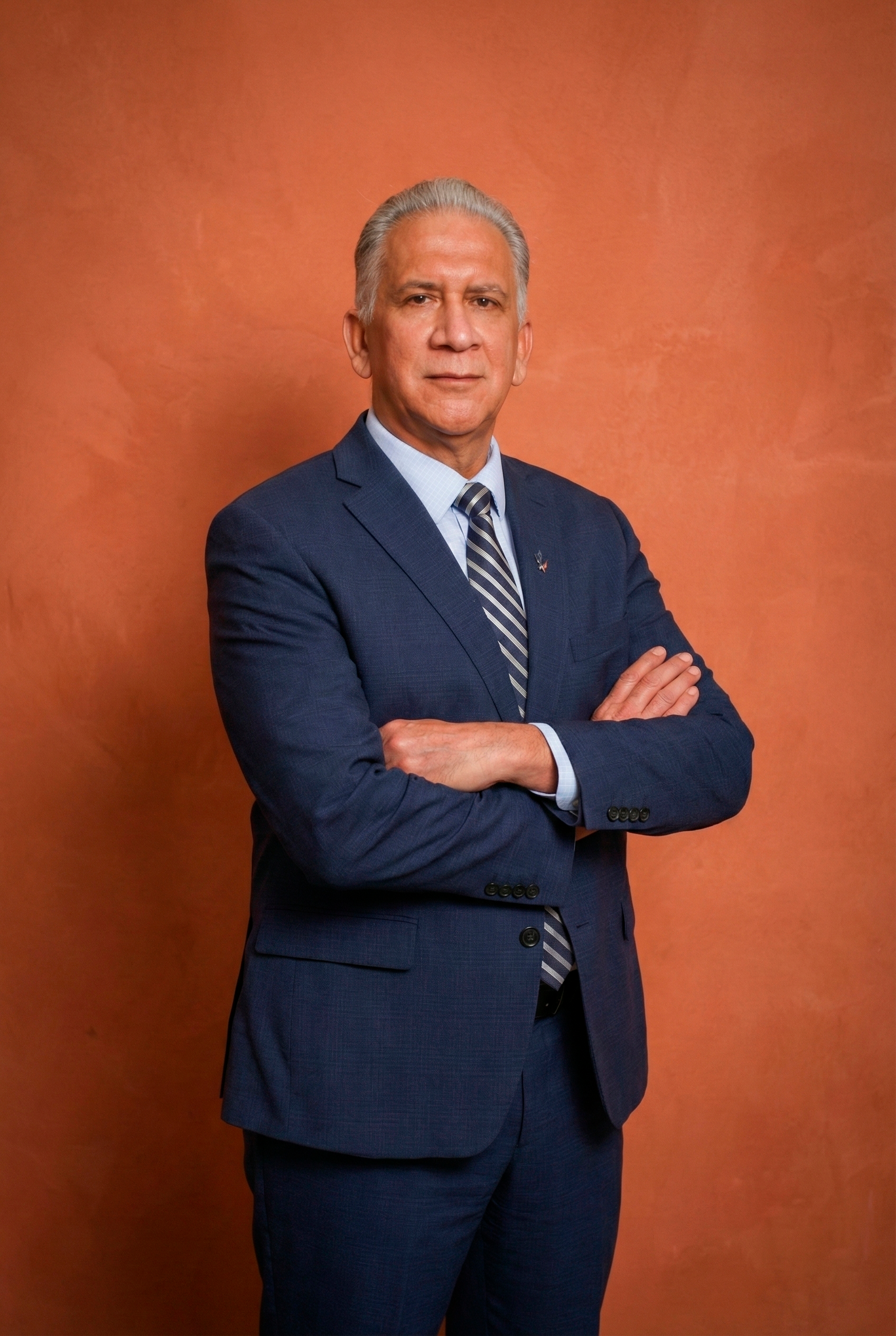
Fernando Triana is a renowned Colombian-Canadian notary public and community leader, honoured with medals commemorating the reign of Queen Elizabeth II (Diamond Jubilee) and King Charles III (Coronation Medal) for his contributions to the recognition and integration of the Latino community in Canada. Based in Edmonton, Alberta, he has actively promoted the visibility of immigrants and the construction of community support networks, becoming a benchmark for civic engagement and public service.
His trajectory combines professional practice in notarial law with a vocation for leadership that strengthens ties between the Latin American diaspora and Canadian institutions. From founding Soy Hispano Magazine and Soy Hispano Television to advocating for unity across many Latin American flags in Alberta, Triana represents an example of transformative migrant leadership that inspires both professionally and in the community.
The first winter marks memory like a cold seal. In Toronto, with no certainties beyond the protection of the shelter, with his wife and two children – aged eight and eleven – and extended family still in Colombia, Fernando Triana focused on the basics: understanding a new country, learning a language that – he admits – was his hardest barrier, and deciding whether the life he wanted was possible there. Two and a half years later, the route took him to Alberta, where he anchored both his personal project and his public vocation. “There are three barriers that the immigrant must break: the language, the cold and the family bond,” he sums up. The diagnosis is simple; the work to cross them is long.
His service story did not begin in Canada. It comes from before: community activism from a young age, election as mayor at twenty-four, and provincial political experience in Cundinamarca that ultimately forced him to leave the country “due to security situations.” The extraordinary thing, in his voice, is not the epic but the continuity. He arrived with his vocation intact. “I always liked social work,” he says. What he found, particularly in Edmonton, was a Latino community he describes as poorly organized, in contrast with Toronto, where there was more structure. He saw needs, assumed leadership and began to build.
One example is the creation of Soy Hispano Magazine, which over time became Soy Hispano Television: a community media platform to inform and connect, with a focus on social needs rather than spectacle. The formula was not to close in on one’s own, but to widen the circle. “To be successful here, you can’t just stay within the Latino community; we also have to look at and explore Canadian society,” he says. In his experience, that openness returned something decisive: support. “In all the projects I started, I always had the support of many Canadians,” he recalls.
The professional clash that newcomers face is a scene he recognises again and again. Civil or petroleum engineers, doctors, specialists: solid degrees that, upon landing, become credentials that must be deciphered. Validation takes time, English bites, and the biographical clock keeps ticking. “Young people may find it easier, but those who arrive at forty-five or fifty are afraid to start a career again,” he says. In this transition, many end up in jobs far outside their training. His example to measure the waste is concrete: a Russian immunologist, “an eminence” in his home country, working as head of maintenance. It is not a reproach to manual labour; it is an alarm about unchannelled talent.
Faced with this reality, his proposal points toward information and accompaniment. “The main problem is the lack of clear information,” he insists. There are English courses and basic services; what is missing is a robust, transversal professional guide that welcomes those who arrive with degrees and offers realistic routes to re-enter their field: equivalency processes, exams, sectoral networks, mentors. Not only for Latinos; for all communities. The idea recurs in his voice with the tone of someone who has seen the same stumble too many times. What is missing is not desire, but a map.
Latino identity, for him, is not a set of slogans but a practice: to help. “Just as they helped me, I must help others,” he says. That principle comes from Colombia and became a compass in Alberta. Helping, in his case, meant convening dispersed leadership to coordinate actions, building bridges with municipal and provincial authorities, and sustaining cultural and social projects that provide visibility and services. But it also meant stepping outside the perimeter of “the Latino” and working with other diasporas.
When he lists the origins of his first major distinction – “In 2013 I received my first medal, the Queen’s Diamond Jubilee Medal” – he links it to settlement programs in Edmonton that were not limited to Hispanics: “especially with African, Sudanese, Middle Eastern and, of course, Latino communities.” That ceremony left him with an image: “I was the only Latino present.” For him, more than a curiosity, it was a clear message: recognition came because he had been involved in society as a whole.
Latin American unity in Canada is, in his narrative, a concrete challenge, not a decorative phrase. “Even though we are a lot of Latinos, we are also a lot of flags, and that divides us.” The line appears when he recalls conversations with the mayors of Edmonton and Calgary: “How are we going to give them a Latin House if the Mexicans come and ask for one for themselves, the Colombians another and the Salvadorans another?” The answer he proposes is simple in its formulation and complex in its execution: ask for a single Latin House for all, a common umbrella capable of articulating national differences without erasing them. His argument does not ignore the value of roots; it stresses that in Canadian public life, efficiency comes hand in hand with cohesion.
Personally, he measures success with two yardsticks. The first is family. “My children arrived very young… and today they are professionals,” he says with quiet pride. The second is communal: seeing the change in understanding among leaders and neighbours about the need for unity and participation beyond the borders of the neighbourhood and language. That work, he insists, would not have been possible without the decision to cross into Canadian society, to weave alliances with those who were already there, to listen and to learn. It is not a denial of identity; it is civic strategy.
His view of how to break barriers returns, again and again, to English. Not as a symbol of “assimilation,” but as a practical tool. “You don’t have to be afraid of English or think that because you are Latino you are not going to be accepted,” he says. Acceptance, in his experience, is built with performance and perseverance. “Latinos have a reputation for being hardworking and entrepreneurial,” he recalls, and that, well channelled, opens doors. The other half of the equation is encouragement: understanding that uncertainty is part of the beginning and that opportunities are sought, not waited for. “We often put up the barriers ourselves,” he warns; that is why his advice to those who have just arrived is twofold: set goals and go out and look for them.
The role of institutions appears in his story as both possibility and limit. He acknowledges that Canada “is an open society, which values good professionals,” but he also notes that many settlement agencies cover the basics better than they support the professional leap. The gap, he explains, has consequences: years of idle talent, loss of income, discouragement. Hence his insistence on building professional support structures that translate the system for those who arrive as adults, that accompany them beyond the English classroom, that connect them with unions, regulators and employers. The anecdote of the Russian immunologist is not an exception; it is a symptom.
Not all his images are of lack. He also recalls moments when Canadian networks responded generously. “In all the projects I started, I always had the support of many Canadians,” he repeats. This observation feeds his idea of unity: it is not enough to organise one’s own house; we must be part of the common house. That is why, he says, his work included settlement programs that crossed cultural borders, and why his vision of the future is not limited to one city or province. He speaks of national coordination for the Latino community, with programs that benefit “all Latinos, regardless of the city.”
The closing of his story avoids triumphalism and prefers clarity. Language is learned with discipline; cold is tolerated with community; family distance hurts, but is softened by new networks. Professional validation is a long road, especially if you arrive close to fifty; even so, “it can be done.” Organisations with accurate information shorten journeys. And unity is not a pretty slogan, but a practical condition for asking and negotiating better.
Triana condenses it into a repeated scene: city leaders asking why they should support five different Latino houses. His answer is the same one that organises his work: one house, so that everyone fits. In that shared roof – metaphorical and concrete – lies his vision of belonging as a force for transformation.