Professional Profile
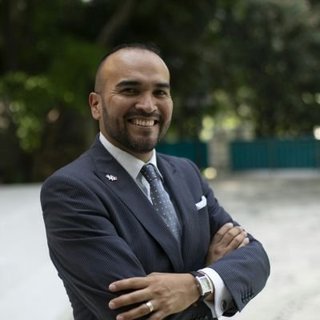
Carlos Rojas-Arbulú is a Peruvian born Canadian diplomat and senior civil servant. He serves as Head of Trade and Investment for Global Affairs Canada at the Embassy of Canada in Chile, where he leads economic diplomacy, trade promotion and investment attraction between Canada and the region.
Since 1989, when he arrived in Montreal at the age of 14, Rojas-Arbulú has built a career of more than twenty years in the federal government, with postings and responsibilities that span Latin America, Asia, Africa and North America. A specialist in economic diplomacy, he has worked on trade agreements, public private partnerships and the internationalization of Canadian companies, focusing on job creation, sustainability and long term relationships.
Known for his multilingual abilities and intercultural leadership, he manages teams and partnerships with governments, chambers of commerce and multilateral organizations. His career embodies the contribution of the Peruvian and broader Latino diaspora to Canadian foreign policy, bringing diversity, a strong ethic of service and a bridge building mindset to Canada’s international engagement. Committed to inclusive development, he supports initiatives that integrate responsible trade, innovation and opportunities for new generations.
At fourteen, Carlos Rojas thought he was travelling. He had the excitement of a first flight and a handful of English words learned in Lima. When he landed in Montreal in 1989, the landscape changed immediately. Almost everything happened in French, the codes were different and the “trip” quietly turned into a destination. With his parents and a family network already in Quebec – grandparents, aunts, cousins – he started a routine of odd jobs: cleaning, picking fruit, handing out pamphlets door to door, restaurant shifts. “It was very hard. Very hard,” he recalls. That beginning taught him the strength of sacrifice and patience.
His story matters in the Canadian and Latino context because it gives names and dates to a broad idea: the social mobility of a migrant family in Canada. It also shows how Latino identity – made of bonds, work and memory – can dialogue with Canadian civic culture without being diluted. Rojas speaks of an “emotional, spiritual and family debt” to his parents and of a responsibility as a new Canadian: to give back, to professionalize, to contribute. For him, that responsibility took the form of more than two decades in the federal public service and, today, a diplomatic role that requires languages, intercultural sensitivity and judgment.
The origins are clear. Lima in the late nineteen eighties, a family that decides to emigrate in 1989. In Peru, his father worked two jobs and dreamed of a banking position. In Quebec, he arrived to something else entirely: bathrooms to clean and surfaces to leave spotless. “My father ended up cleaning bathrooms,” Rojas says, with a mix of gratitude and realism. He and his mother teamed up in multiple entry level jobs. The family network helped, but language and an unfamiliar system meant that adaptation was slow. “I did not understand anything. It is not the same to learn a language in class as it is to really try to communicate,” he recalls. The first seven years were the most complex; the first three, the roughest.
That formative stretch adjusted his compass. It was “difficult, but extraordinary,” he says. It prepared him to take responsibility, to value his parents’ resilience and to look at Canada with a mix of gratitude and ambition. In his reading, the country offered “a great opportunity to do something good,” and that opportunity demanded something in return: study, perseverance, respect for the rules and a willingness to integrate without giving up his own story.
Migration also brought the kind of language learning that would later become a professional advantage. “I speak several languages,” he notes, and that competence, along with travel and exposure to diverse realities, opened doors. Over time, he took on more complex tasks and that steady rise led him to the federal civil service. “Today I have more than twenty years working for the federal government,” he says, and he summarizes a turning point: “I have a diplomatic post and I have built an interesting career, of which I am proud.” He does not go into institutional detail, but he underlines what he values most: intercultural sensitivity as a working tool for solving problems, negotiating and representing.
The path was neither straight nor idealized. The list of obstacles is familiar to those who migrate in adolescence: language, validation of previous learning, study habits in another system, low skilled jobs to support the family. Rojas adds a layer that, now as a father, he views with new eyes. At fourteen, he says, “you do not have perspective.” Seeing his own daughter at that age brings back, by contrast, the weight of what he experienced. That mirror multiplies his sense of responsibility. “I owe an emotional, spiritual and family debt to my parents, who made that sacrifice of leaving everything behind,” he says.
The achievements he names are anchored in verifiable facts from his testimony: the year of arrival (1989), integration in Quebec with the help of extended family, a decade of hard work in modest jobs and the consolidation of a career of more than twenty years in the federal government which, at the time of the interview, includes a diplomatic posting. They are not “strokes of luck,” he emphasizes, but the result of long term work that combines study, languages and willingness to assume responsibility in diverse environments.
Latino identity, in his life, is not a slogan. It is practice. “That Latinity is closely tied to family, values, teachings,” he says. It is no coincidence that family appears again and again as his axis: his parents’ sacrifice when they emigrated, the upbringing of his three children, his relationship with his Quebec born, French speaking wife and his desire to transmit functional bilingualism and a bicultural sensibility. “That hybrid has allowed me to navigate my personal and professional life,” he explains. The verb he chooses – to navigate – is precise. It is not about choosing one shore. It is about learning to move between them with ease and respect.
In the public sphere, this double perspective becomes a way of working. Rojas speaks about exposure to “many realities,” about projects that require listening before deciding and about responsibilities that demand prudence. The diplomatic profession, he suggests, demands exactly that: reading context, building bridges and representing a country while knowing that the identities inside it – including his own – are diverse. If his father once dreamed of a bank job and ended up cleaning bathrooms to support his family, he set out to honour that gesture through a career oriented toward service. “To some extent, we have tried to do the best we can,” he sums up.
The community dimension sits at the heart of his vision for the future. He does not define himself as an activist or list specific community titles, but his language points to an ethic of giving back. Migration, in his view, creates a civic responsibility. Those who arrived and found opportunities must help others move through the system with fewer obstacles. In his case, that contribution takes shape as attentive parenting – “we are passing that identity on to our three children” – and rigorous professional practice in the public sphere. The underlying conviction is clear: belonging is not proclaimed, it is practiced.
Rojas does not romanticize the process. He recognizes that the early years are painful and that integration requires more than individual effort. But he observes, calmly, that “it was difficult, but extraordinary.” The final adjective does not soften the hardship; it frames it. Extraordinary because it allowed him to build a life and return part of the moral and material capital his family invested in 1989. More than three decades later, he says he lives “with pride.” In his voice, that pride is neither relief nor vanity. It is a form of active gratitude.
In his personal philosophy, Canada is not an abstract promise but a system that improves when the people who inhabit it participate. That is why he studied. That is why he accepted growing responsibilities. That is why he now represents the country in diplomatic functions. His Latinity is not an exotic ornament on that path. It is the engine that gave him language, loyalties and an ethic of care. “That hybrid has allowed me to maintain that feeling of wanting more, of self improvement,” he says. In that phrase lies the audacity and sobriety of someone who learned early that no lasting improvement happens without discipline.
The closing matches his tone: sober. Rojas does not offer a moral; he offers continuity. In everyday life, he explains, the mix of roots and citizenship appears in small decisions – at the family table, in the languages spoken at home, in the way he listens at work, in the willingness to “do the best you can.” The sense of a “first trip” is behind him. What remains is a country he chose to belong to and a profession that obliges him to look outward without forgetting where he comes from. “I have a debt and a responsibility,” he says. The key to his path may be just that: turning debt into service.