Professional Profile
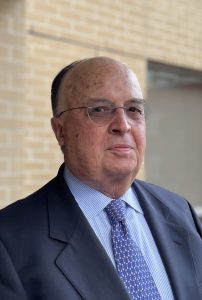
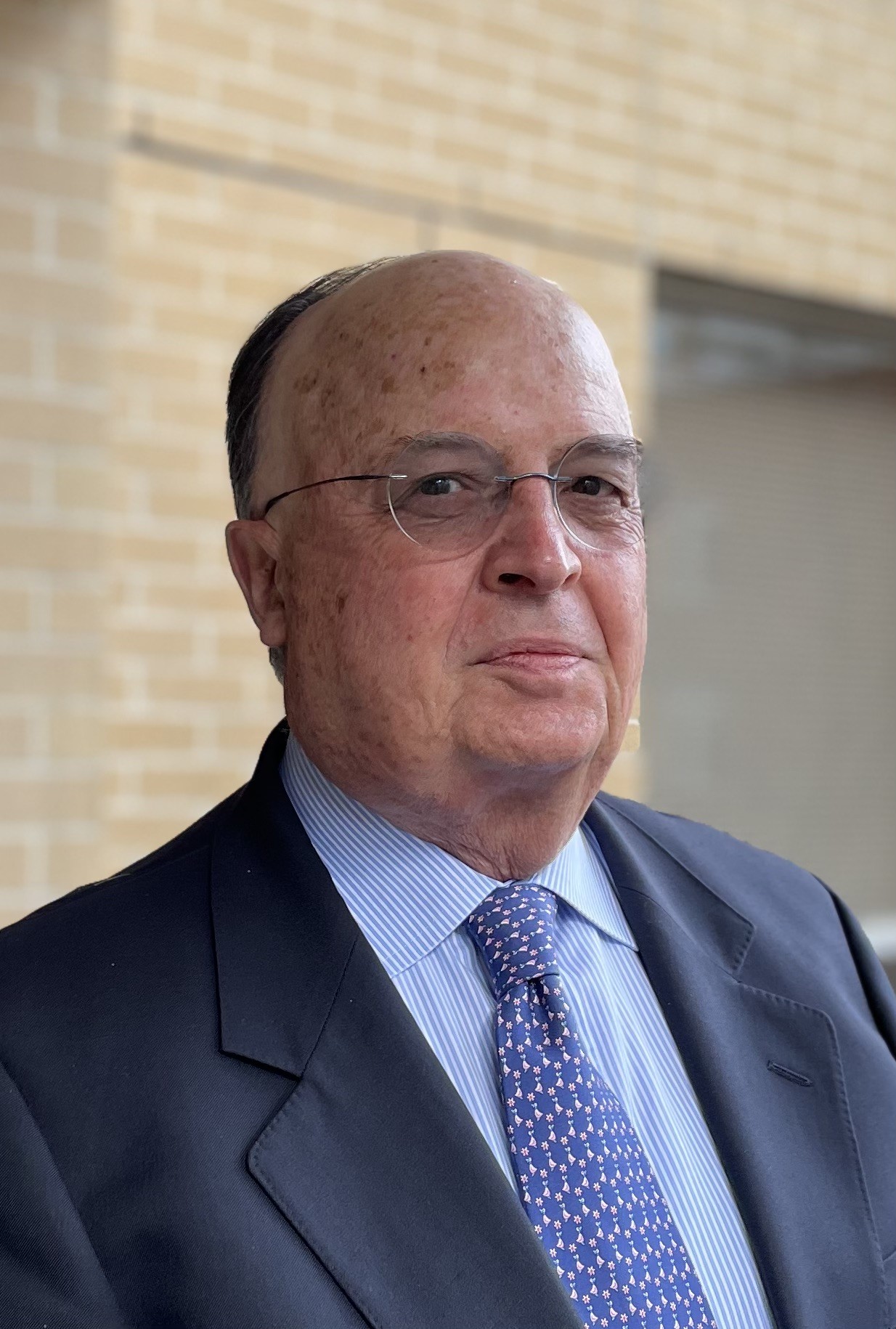
Dr. Jaime Escallón is a Colombian surgeon and professor based in Toronto, Ontario. Trained initially in Colombia and later certified, as he recounts, by the Royal College of Physicians and Surgeons of Canada, he has built a career across two medical systems, combining clinical rigor with a long-term commitment to education, mentorship, and surgical training.
Across Bogotá and Toronto, his work has centered on high standards and practical preparation. He has supported residency training through structured teaching and an annual course designed to help residents prepare for final Royal College examinations, a sustained effort he describes as spanning roughly two decades. In parallel, he has kept active ties with Latin America through conferences, collaborations, and support for regional professional communities, acting as a bridge between shores.
Full name: Dr. Jaime Escallón
Origin: Colombia (initial medical training in Colombia)
Arrival in Canada: 1977 (first residency and certification); professional return in 2000–2001 (as he recounts)
Current city: Toronto, Ontario
Field: Surgeon; professor and residency trainer
He first arrived in Toronto in the late 1970s, newly married, with an offer that redirected his path: a research position that became a gateway into residency and, later, certification within the Canadian system. The memory is precise, not sentimental. “I did my entire specialty and passed the Royal College exams… as a surgeon,” he recalls. The plan was not to stay. After completing that stage, he returned to Colombia.
In Colombia, he describes nearly two decades of clinical leadership and institutional responsibility: service leadership at Fundación Santa Fe de Bogotá and a period as president of the Colombian Society of Surgery. The return was not a retreat. It was a continuation of the same line: training well, working at standard, and building professional structures that outlast a single role.
In Christmas 2000–2001, during a visit to his daughter in Toronto, another turn appeared. Colleagues from an earlier generation proposed that he take on a service chief role at Toronto Western Hospital. He accepted a sabbatical year, and within days of arriving, he was back in the operating room. The transition was rapid, but not effortless. It required rebuilding routine, credibility, and fluency in the day-to-day codes of a system that rewards clarity and consistency.
In Canada, he rebuilt life around two anchors: the hospital and the university. Beyond operating and supporting teams, he established, he says, an annual course to prepare residents facing the Royal College final exam, a method-driven practice sustained for about twenty years. In parallel, he maintained ties with Latin America: conferences, collaborations, teaching, and support for the Latin American Society of Surgery. His compass, he says, is simple: to help.
Family context accompanies the professional decisions. One of his sons lives in Toronto, and he has two granddaughters; his daughter is in San José, California; the youngest lives with them. His wife, a biochemist, completed a master’s degree and leads a community organization focused on employment for people with disabilities, in partnership with the school system. That anchor provided more than logistics. It became an emotional network capable of sustaining the weight of a change of country and system.
Escallón does not romanticize the process for those who arrive later. He emphasizes that his case had objective advantages: he validated credentials from the start, at a time when access to residencies was more direct. “When others arrive, they have to start doing exams, residencies, etc.,” he notes. That does not make it impossible; it introduces nuance. Starting over at fifteen, twenty-five, or thirty is different than doing it after decades of practice. Even so, he insists, it can be done.
The key, in his view, is learning to navigate the system and building networks. He is not describing opaque privilege. He means professional circuits that recognize trajectories and generate trust: mentors, colleagues, departments, research groups, and reference points that make competence visible in a crowded environment.
“Part of the problem is that nobody knows them,” he says. Research lets you demonstrate capability, understand how the system works, and find mentors. Over time, that exposure can lead to graduate programs, PhDs, or residency access. He cites a case he followed closely: a student who joined a research group, progressed to graduate studies, and later accessed residency. “It can be done.”
The other element he repeats is language. It is not enough to read or “get by.” Entering an English-speaking healthcare system requires the ability to explain, persuade, comfort, and negotiate, especially under pressure. Toronto is a mosaic of languages, he notes, but in formal services, banks, work, paperwork, and clinical environments, English proficiency makes the difference. The same applies to behavioral codes: punctuality, respect for rules, and interview habits. It is not about becoming someone else; it is about functioning effectively within a shared context.
Latino identity, in his view, is not reduced to a limited set of “exclusive” values. Ethics, respect, compassion, honesty are universal. What he does identify as a contribution is a relational register: warmth in interpersonal treatment that, when balanced well, strengthens clinical practice. “You support and explain; the patient decides,” he notes. Empathy with prudence builds trust beyond accent.
His experience also registers the power of microcosms. In any large city, national communities recreate an environment that contains and protects; sometimes, it also limits. He recalls meeting patients who had lived in Canada for decades without learning English because their community contained them. He does not criticize it. He points to the consequence: without language, full access to the labor force and the system remains restricted.
The story does not omit the family edges of migration. His youngest son, fifteen when they arrived, took almost three years to learn English. The adjustment was slow; regular classrooms were a daily challenge. One day, the boy asked to stay at school after class. “He felt safer and more welcomed.” The scene condenses a lesson: integration is not a moment. It is time, repeated exposure, and a steady reduction of fear.
On collective outlook, his diagnosis is clear. The Latino community in Canada will continue to grow, pushed by political and economic crises in the region. The second generation, those born or raised here, gains weight and shapes an identity that does not deny its origins. There is, however, a cohesion challenge: Latinos are not only Latinos; they are Colombian, Mexican, Peruvian, and more. National identities tend to fragment. Building cross-cutting networks can reverse it.
In that task, health professionals, he believes, have a role: lead, mentor, open opportunities, and defend policies that facilitate integration without sacrificing standards. He welcomes the fact that Canada recognizes the need for physicians and opens programs, while warning against false expectations. He has accompanied highly capable colleagues who took years to overcome barriers, starting from below despite strong prior practices. The message stays practical: be patient, be strategic, and measure progress in credible steps.
The end of his story avoids triumph. It returns to method and service. Train well, return to contribute, return again if there is an opportunity to serve. Between two shores, residency, in both senses of the word, becomes less a destination and more a disciplined practice: staying useful, staying rigorous, and helping others navigate a path that is rarely linear.