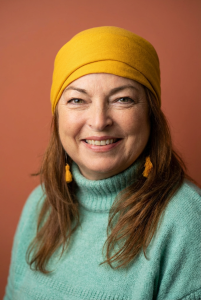

Professional Profile
Stephan Dyer is a financial professional and stand-up comedian based in Toronto. Born in San José, Costa Rica, to a Peruvian family, he came to Canada in 2003 to study at Bishop’s College School and later completed a degree in Finance at the University of Toronto. He began his corporate career at Scotiabank, where he became one of the youngest managers in the institution, combining discipline, a growth mindset and a long-term vision.
In parallel, Stephan developed a trajectory on stage. He first performed as a rapper with his brother at concerts in Costa Rica, then experimented with humorous content on Twitter and Vine, before consolidating himself in stand-up comedy from 2014 onwards. His immigration journey and his integration into Toronto’s Latino community feed his material, his perspective and his voice.
Today he encourages other migrants to integrate into Canadian culture, take care of their finances, invest and build wealth, while he continues to pursue his own goal of being, as he says, the best father, husband and comedian he can be.
Stephan D.’s life could be drawn with half-closed suitcases. At fifteen, wearing a brand-new uniform and a Latin surname on the roll call list of a boarding school in Quebec, he walked into a classroom where no one pronounced his name the way it sounded at home. It was 2003. Outside, the cold was new; inside, a feeling took hold that would mark him for years: what he calls living in an “eternal farewell.”
The son of Peruvian parents and born in San José, Costa Rica, Stephan embodies a Latin American identity woven across several countries. As a child, he watched his family split and rebuild across borders. As a teenager, he crossed countries in search of new opportunities. As an adult, he built a career in Canada’s financial sector and on stage, where he performs today as a stand-up comedian. His story matters in the Canadian and Latino context because it shows another side of migration: not only the struggle to integrate, but the decision to turn discipline and resilience into a form of belonging.
Stephan grew up “in a Peruvian home” in San José. His parents and two older brothers had been born in Lima, and with them he inherited a culture of high expectations and affection in equal measure. At six, his parents’ divorce fractured the family geography: his father moved to El Salvador, and the house stopped being a fixed point on the map. Moves to Mexico came next, and later, to Canada.
In 2003, at just fifteen, he arrived in Canada for the first time. He enrolled at Bishop’s College School in Quebec, where he completed high school. The teenager who arrived from Mexico, used to other temperatures and codes, suddenly found himself in an English-speaking boarding school, far from his family, forced to learn not only another language but another way of inhabiting the world. After graduating, he moved to Toronto to study Finance at the University of Toronto.
By then he had moved between countries more times than many adults. “I moved four times before I was eighteen,” he sums up. What could have become a permanent fracture turned into a kind of involuntary training for adult life. He condenses it into a phrase that sounds like a personal motto: “I am a machine of discipline, resilience, integrity and love.” That “machine,” however, did not build itself.

His family was the first school. From his father he learned “discipline and a growth mindset”; from his mother, “perseverance and a love of art and sport.” His older brothers also became mirrors: one left the corporate world to dedicate himself to music; another overcame addiction and is now, Stephan says, “a great father.” His stepmother and seven step-siblings, all professionals and marathon runners, completed the circle, showing him “that a life of high performance is possible in every area.” To that list he adds remote mentors such as Tony Robbins and Alex Hormozi, whose ideas helped him refine the mentality of sustained effort he applies daily.
Before becoming a comedian in Canada, Stephan had already tasted the stage in Costa Rica. Between 2007 and 2008, still very young, his brother invited him to rap at his concerts. Those shows, in front of hundreds of people, were no simple pastime. “I would get on stage in front of hundreds of people and live it as if it were the World Cup final,” he recalls. That early experience left him with one certainty: “From then on I knew I had something for the stage.”
From there he began to explore his voice in other formats. He wrote on Twitter, experimented with sketch comedy on Vine and, in 2014, received the decisive invitation to try stand-up. At the same time, he was building a career in the financial sector. He worked at Scotiabank and, according to his own account, became one of the youngest managers at the institution. That double life, between formal suits and viral videos, reached a turning point around 2013 and 2014.
During those years, his content on Vine went viral and he began to be recognized in Costa Rica. The possibility of returning to the country where he had grown up stopped being an abstract idea. “I considered going back; I even asked for a job transfer,” he says. The move seemed set, but the transfer never materialized. Shortly after, he met the woman who is now his wife. That meeting sealed his bet on Canada. “Since then I never thought about it again,” he admits.
If there is a thread running through his trajectory, it is the readiness to sacrifice apparent stability for deeper growth. Stephan experienced this firsthand in 2003, still living in Mexico, when everything seemed to be going well: sports, school, social life. Club América had even invited him to its youth academy. Yet, together with his father and stepmother, he made a decision that would change his path: leave everything behind to attend boarding school in Quebec. “It was hard to leave it all,” he acknowledges, but he knows that this early renunciation opened the door to high-level studies and a professional life he would otherwise not have imagined.
The physical distance from his family has been, he says, “the biggest challenge” of his life. It is not only about kilometres, but about hours of solitude in dorm rooms, about schoolyards where no one shares his history or accent. That same loneliness, he insists, forced him to develop the emotional resilience and discipline that he now considers his greatest strengths. This resilience is not a buzzword for him; it is a practical tool he has used to adapt to new languages, cities and roles.
His cultural integration in Canada unfolded in two stages. “The first ten years I lived 100% in a Canadian context,” he explains. Boarding school in Quebec and university in Toronto immersed him in a reality where his Latino side seemed to recede into the background. Starting in 2012, however, he began reconnecting with the Latino community in Toronto, especially through music and cultural events. That reunion with his roots did not contradict his integration; it completed it. Through parties and stages, he found a space where his humour, his story and his accent belonged in the same narrative. “That led me to stand-up in 2014,” he says. Today he describes his life in balance: “I enjoy my roots, but I also feel at home in Canada.”
That balance between belonging and staying distinct also lies at the centre of the message he shares with new arrivals. Stephan does not stop at the surface of good wishes; his roadmap combines cultural integration and financial strategy. “First, integrate into Canadian culture, be a tourist in your own adopted country, but without losing your roots,” he suggests. The sentence condenses his own experience: curiosity about his environment, openness to the new context and, at the same time, the decision not to dilute his Latin American identity.
He then moves into a field he knows well: money and the structural opportunities in Canada. “Second, invest: if you work in a Canadian company, buy shares at a preferential price. And third, as soon as you can, buy an apartment,” he recommends. This long-term view grew out of observing that many migrants arrive thinking they will stay a short time but end up building a full life in the country. “Many of us think we’ll only be here for a while, but the truth is that we put down roots,” he concludes.
His vision for the future is simple and demanding at once: “To be the best dad, husband and comedian I can be.” He does not mention awards or numbers; he speaks of roles and relationships. Seen in perspective, the phrase echoes the six-year-old who watched his family disperse across countries and the teenager who became used to goodbyes. Today, Stephan’s main aspiration is about sustaining, not leaving; about staying, not abandoning.
If he could talk to his younger self, he would offer advice that could reach many other migrants and artists torn between the urgency of recognition and the real timing of life. “Be patient: everything comes in its time,” he would say. For years he suffered from not being recognized as an artist, until he realized he did not yet have a body of work to back him up. That awareness did not extinguish his ambition; it ordered it: discipline first, then results.
There are no grandiose gestures or easy morals in Stephan’s story. There is, instead, a quiet coherence between what he has lived and what he now proposes. Resilience is not, for him, a fashionable word but a capacity sharpened with every move, every new setting, every difficult decision. From Costa Rica, through Mexico and El Salvador, to Canada, his Latin American identity has become less of a flag and more of a concrete way of being in the world: working hard, reinventing himself without losing his origin and learning to put down roots where once there were only goodbyes.
In the end, his philosophy fits in a brief line that reframes time and confidence in the process: “For years I suffered from not being recognized as an artist, but I still had nothing to show.” In that sentence there is a sober invitation to look at life with humility and perspective. Stephan D. continues to refine jokes, projects and goals. Meanwhile, his own biography is already, for many, evidence that discipline, lived with integrity and love, can become the most solid homeland a migrant has.